I think speaking constantly about Costa Rica and adding valuable travel insights could be more worthwhile, especially people like us. Since we’re enthusiastic backpackers, we are always looking to mingle in a place where nature, beach, adventure, culture and diverse food styles interlinks. Thankfully, I vividly remember it could be highly possible in Costa Rica.
Costa Rica is located between Nicaragua and Panama, a geographically small country, but when it comes to nature, adventure and wildlife it is far bigger than you think.

I already discussed the intresting things to do in Costa Rica and where to stay in Costa Rica. But this time I feel it is a slightly good idea to offer some of the fun facts about Costa Rica to my travel readers to make their trip more valuable and interesting. These below 15 facts are must for making a travel plan smart, safe and easy.
Before digging about 15 fun facts, you’ve to know most of the facts are the same lines about sloths and pura vida, to some extent it goes to old statistics. But today we’re coming with the current number, story behind it and practical note for you to do your upcoming easy travel.
Costa Rica at a Glance
| Capital City | San José |
| Official Language | Spanish |
| Currency | Costa Rican Colón (₡). But the US dollar ($) is widely accepted in major tourist spots. |
| Size | About 51,000 square kilometres/19,730 square miles. Approximately the size of West Virginia and Denmark, half the size of Iceland. |
| Population Counts | Currently around 5 million people live there. |
| Coastlines | Close to the Caribbean and Pacific Ocean. |
| Active Volcanoes | Arenal, Poás, Irazú, Rincón de la Vieja and Turrialba. |
| Country’s Peak Point | Cerro Chirripó, around 3,800 m from sea level. |
| UNESCO World Heritage Site | 4 |
| Seasons | Dry season (from December to April) and Green/Wet season (from May to November). |
Here are the 15 Fun Facts about Costa Rica
1. Costa Rica is world’s fourth happiest country, not the first one
 Recently you may see Costa Rica is one of the happiest countries in the world. Some travelers wrote that it is one of the happiest countries in the world. Yes it is but not in 2026. According to the World Happiest Report 2026, Costa Rica slightly moved to 4th place, behind Finland, Iceland and Denmark, with a life evaluation score of 7.439.
But the interesting thing here is, Costa Rica is the first and only country in Latin America to reach the top 5 positions and consistently rank within the top 10.
Its ranking list goes like this: In 2023, its rank goes to 23, in 2024 slightly slip to 13th rank. Immediately after 2025, surprisingly its rank sits in 6 positions, sitting within top 10. But this year Costa Rica’s happiest index reached 4th place.
But according to the Happy Planet Index, Costa Rica often sits in first place multiple times, but not according to WHI.
Why it is important to us: This report help you make how safe to travel, welcoming ambiances, strong cultural and political policies to visitors to make their easy travel.
2. Pura Vida is a Toolkit, not a slogan
Most of the travel blog highlighting in their Costa Rica contents, everyone must follow Pura Vida while traveling. Initially I was confused about what Pura Vida and what’s that mean. But when I closely observe it literally translates to the meaning of “pure life”.
In simple terms it’s used in day to day words by locals like hello, goodbye, thanks, I’m fine and don’t worry. But here is the tricks: if you only learn one phrase, you’ll miss how Ticos (locals) really talk. Despite Pura Vida, some basic words you’ve to know.
| Words | What’s Meaning |
| Pura Vida | Hii, bye, thanks and all ok/good |
| Maue | Dude, Mate (usually talking at friend circles and who talks casually) |
| Tuanis | Cool, great |
| Brete | Job, work and gig |
| Diay | Well or so what?- often using while making normal conversations |
| Chunche Thingamajig | Refer to get something or some items. |
Most of the phrases here originated from the Spanish, especially words like Ticos. Word itself comes from their habit of adding.
3. About 98.6% of country’s electricity is renewable, but electricity is not all energy
According to 2025 research, around 98.6% of the country’s electricity came from hydro, geothermal, wind energy, solar and biomass. To be more specific, according to state utility ICE, in 2021, electricity share goes to 99.98%, in 2023 around 95%. But during 2024, it witnessed only 86.8% of power supply due to droughts and fuel burning plants. But it recovered in 2025, offering 98.6% share.
Electricity is only a part of the picture. But once you look at this actual scenario, Costa Rica transformed its electricity supply from hydropower to imported fossil. That’s why carbon neutral goals remain as a country’s major power supply chain and remain work in progress.
4. In 1948, Costa Rica abolished its army
After the 1948 civil war, the country decided to delete permanent military troops and was completely abolished according to their article 12 of 1949 constitution act.
Leader Jose Figueres Ferrer destroyed the wall of the Bellavista Fortress in San Jose. But after a long effect, the fortress ceased to be an active and slightly transformed fortress into the National Museum. This rigid decision took 1 year apart and decision pending amidst 1948 to 1949.
Not only that, instead of wasting the defense costs Costa Rica decided to use the defense money towards the upliftment of health care, infrastructures, schools and provide Constance old age pensions.
However, the country also decided to abolish the death penalty in 1877 and free and compulsory public education for all. But they have not abolished their Police force, which is still active in the country.
5. Thousands of Sea Turtles reach beach shore at once
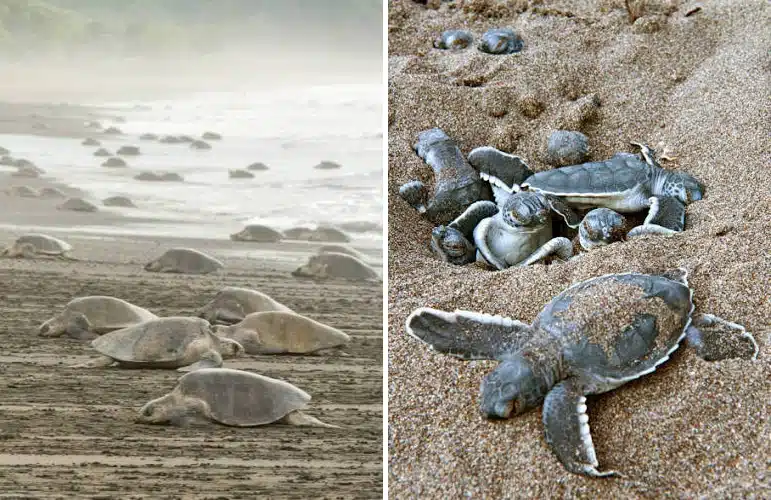
In the list of Fun Facts about Costa Rica watching sea turtles at its shore is more interesting. At Ostional on Nicoya Peninsula, most endangered and rare olive ridley sea turtles come to its shore along giant waves. This natural process of mass numbers of turtles lie on its sand and shore at the same time we simply call it “Arribada”.
To see its beauty and mass migrations better to reach shore during the rainy season and sometimes it is also based on the lunar cycle.
There’re plenty of reasons behind settling the mass numbers of turtles. But according to locals’ beliefs it comes all the way to shore to harvest eggs in a short window at the start of each arribada. Even today you can witness a country arrange funds to conserve and protect its eggs to maximise its populations to escape from the endangered list.
Always keep in mind, don’t try to touch turtles and it loves dark environments.
6. It packs almost 5% of world’s species
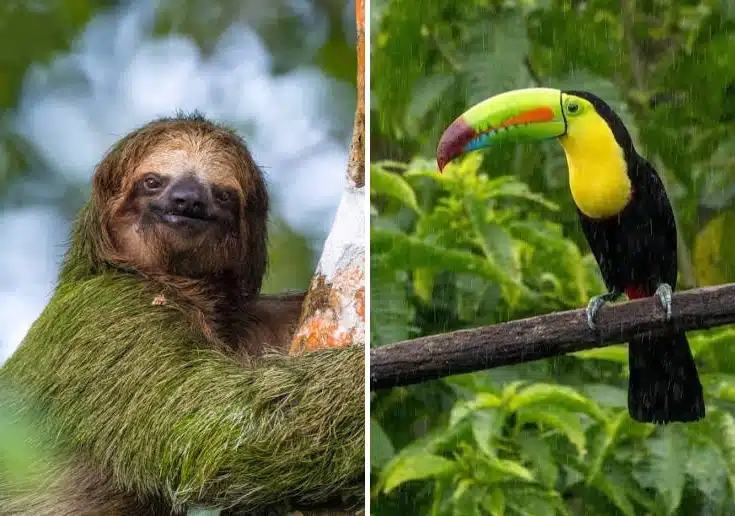
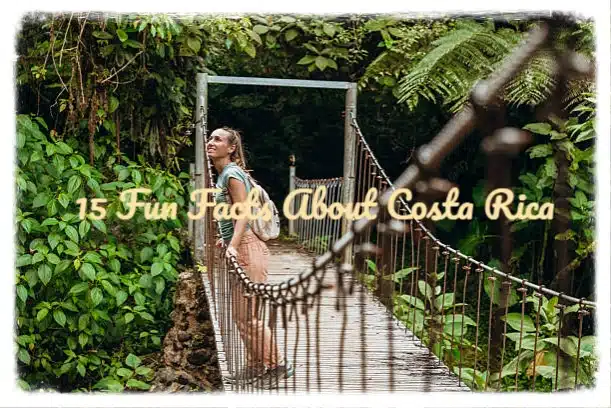
As I mentioned above, one of the reasons most visitors come to Costa Rica is to indulge its lush rainforest, walk its hanging bridge which is located amidst cloud forest and spot diverse species.
What makes me so surprised here is that around 5% of the planet’s species exist within its forest areas. Surprisingly, Costa Rica is just a fraction of one percent of Earth’s land, even though its contributions to the world’s species eco system is really a brilliant one.
When I thoroughly estimate its species collections, 900 species of birds, 50 kinds of hummingbird exist here. These are massive numbers. Corcovado National Park itself has a higher number of species intensity.
To more specific, read below tables for more clear data
| Animals | Expected Places to See | Tips Needed |
| 1. Central American Squirrel Monkey
2. Panamanian White Faced Capuchin
3. Mantled Howler Monkey
4. Geoffroy’s Spider Monkey |
Corcovado National Park | Need a local travel guide and you’ll get through advance booking. |
| Resplendent quetzal, Hummingbirds | Monteverde Cloud Forest | Early morning is the best time to see. Try to pack a jacket while visiting. |
| Sloths | Manuel Antonio, Cahuita and Monteverde | Sloths are so fast, so look up and scan slowly |
| Leatherback turtle nesting | Tortuguero or Las Baulas | Only available during nesting season. |
| Mass Turtle Nesting | Ostional | Check local arrival timing. |
7. Costa Rica brought back its forests from Destructions
The most interesting fact in this list is that most of its forest and green cover is recovered from the brick. To make it clear this below table help you;
At the time of 1980, Costa Rica has just 21% of forest coverages.
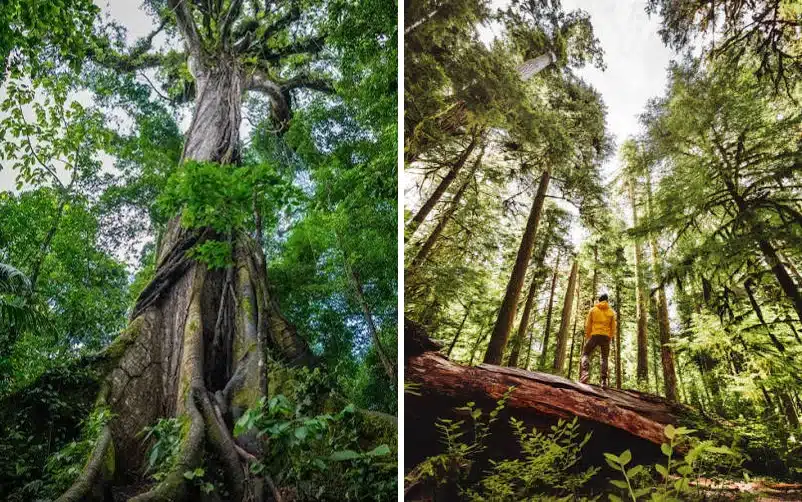
But after 33 years (2013) its forest areas drastically increased to around 50%.
However, today the country successfully sustained and hold major portion of land of forests with 57% to 60%.
There’re number of initiations they have taken, under which banning converting forest into other purposes or uses is the major contribution positively to help to grow their overall share. However, even today’s landowners get paid to keep trees standing and growing in their personal lands is another way to increase its space.
Costa Rica is the first country which introduced the first national payment for ecosystem services programmes in 1997. Programme initiations mutually benefit landowners and forest departments.
8. The Nicoya Peninsula is best Blue Zones in the Country

Nicoya Peninsula is the country’s best place to see people who’re crossing the age of 90 and beyond. While roaming around places like Santa Teresa, Nosara and Samara you’re more likely to see these kinds of people.
There’re some reasons behind these secrets. According to local data’s, family ties, daily movements and living with purpose are the core reasons. However, people’s simple diet also has additional factors to their success beyond their healthy life. They cultivated beans, corn and fresh produced vegetables/fruits and calcium rich waters and added their daily diets.
Notice how beautiful they manage their daily life, and how well organised around people and routines in their day to day life. Make sure that it excluded trending gym concepts.
9. Its Painted Oxcart is a UNESCO World recognised art form
Costa Rica’s traditional painted oxcarts, often called “carretas” used as a primary tool for supply coffee to the coast before the actual road system begins.
These oxcarts used spokeless wheels and discs which initially were family only means of transport and stood as a social status. But over a period of time its design, paintings, bright geometric patterns and unique cart systems make it to sit in the list of UNESCO recognised art forms.
Here is the interesting thing, each Oxcart designed to make its own song, thanks to metal ring striking. While constructing this oxcart people use quality woods for choose to make the sound more melody.
But over a period of time this oxcart became a pride and strong symbol of Costa Rica’s rural past, standing as a secular and religious pride. To some extent stands as a traditional intangible cultural heritage.
If you wish to see oxcarts in different workshops, how paint them by hand and watch closely how the process took place. Today people of Costa Rica treat oxcarts as the national pride as much about the cart as the cargo.
10. There is a Law for Coffee, a ritual and a legend
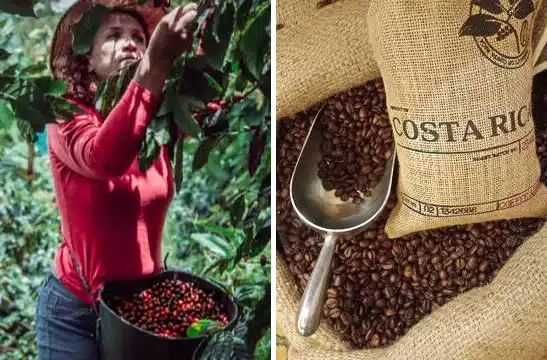
As we knew, Costa Rica is home to vibrant collections of rainforest and exotic wildlife. In the same way it’s a home for some of the best coffee plantations in the world.
But what I feel is so weird is, the only country in the whole planet which is illegal to cultivate coffee farms if it is not a 100% Arabica. They are strictly focusing on quality coffee species rather than quantity.
At every local point coffee is made in a “chorreador”, a wooden stand holding a cloth filter which helps us offer cafecito almost every time.
Due to strict rules and quality of coffee harvesting, Costa Rica often supplies the highest quality of coffee to major places of South America and even the world too. However its total coffee production does not even touch 1% of global production, but it exports more than 90% coffee yields.
11. Hundreds of Stone Spheres scarcity of explanation
At Diquis Delta in the southern part of Costa Rica today you’ll see the most historic and mysterious pre-Columbian stone spheres. Columbian people carved hundreds of these perfect stone spheres which are about 2 meters across and weigh roughly 15 to 24 tons.
But the most interesting fact here is nobody knows why they were created and on what techniques they were shaped so accurately and precisely. Even today archaeologists clearly could not find it why exactly they stand, but in roughly they explain it could be;
- A status identity
- Created to represent the symbol to the Columbian Disguise cultures.
But if you clearly observe these stone spheres some are arranged triangles and geometric formations. Therefore you can conclude it could be also used for astronomical, cosmology and celestial observations.
Even though without clear specifications about its creations, it gets all eligibility to sit in the lists of World Heritage List in 2014. If you get any opportunities to visit the National Museum in San Jose or the Finca 6 site museum near Palmar Sur, don’t miss to see its examples.
12. Cocos Island inspired Jurassic Park and Treasure Hunters
Cocos Island has got its worth to add your fun facts about Costa Rica through all time inspiration to renowned Jurassic Park Island. The islands roughly cover 550 km off Costa Rica’s coast, but today despite its UNESCO World Heritage Site, the island is often cited as an inspiration for the island in Jurassic Park.
However, the island’s marine park makes most divers a vital point where you’ll have the option to dive to see hammerhead sharks. But direct diving is prohibited, you’ve access through live-aboard dive boats, with crossing of roughly a day or more.
Sometimes Cocos Island has gone viral for its pirate treasures. From the last 2 decades many expeditions have searched without any confirmed findings.
13. Its Caribbean Coast tells a different story

African Caribbean workers started to reach its coast during the late 1800s for building railways lines and as a working force for banana plantations. And slowly they started to settle in nearby Caribbean Coasts.
But Black Costa Rican largely prohibited to Limon Province and they’re not fully willing to get country citizenship. This tragic rule still continues today and black peoples are not fully eligible to get citizenship in Limon province.
The Caribbean Coast has today slightly changed from a tragic past to world famous cuisine choices. Food is one of the easiest thing to get, you can taste Caribbean kitchens cooking rice and beans in coconut milk, rondon and pati instead of Pacific side gallo pinto. For better experience The Limon Carnival held every October, one of the great way to choose different Caribbean cuisines at its street part on the coast.
14. Most of its directions are shows as in landmarks and every 100 meters represents 1 block
While walking the streets of Costa Rica you’ll notice most of its streets don’t have any names and numbers as you expect from the rest of the world’s best streets.
Ex: “200 meters north of the church, then 50 meters west”. In Costa Rica “100 meters” clearly explains one city block, not an actual measured distance.
If you get confused while wandering try to save pins before you travel. If you get confused or find it difficult to find your locations, hotels, parks and destinations, use Waze or Google maps. Make sure you don’t trust “meters” literally.
15. Sloth is a National Symbol, but national animal is still debated question
Sloths are such a unique animal in Costa Rica and you can see them everywhere. Sloths were recently named national symbols, but other animals also represented as national animals like White tailed deer. However, clay colour thrush is represented as a national bird.
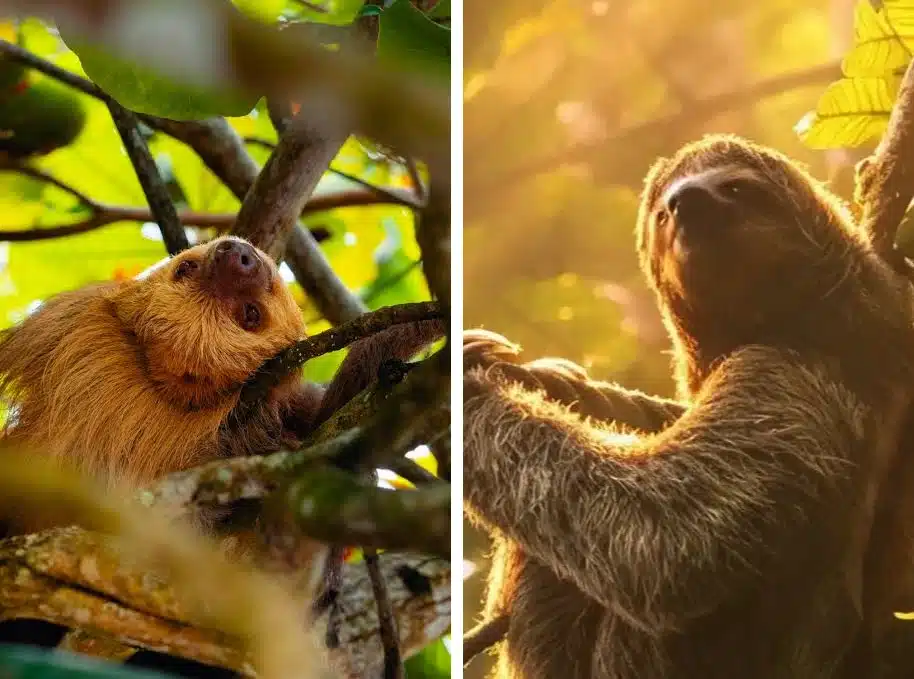
Costa Rica has several official symbols, but sloths were added recently just because the most famous and endangered one. But some data say sloths are often hard to spot.
How to Turn Fun Facts into a Better Trip
Below table help you how to make your trip more meaningful and worth one through its most interesting facts;
| Fun Facts | What it means for you |
| Landmark directions | Try to save map pins and ask your hosts to share locations. |
| Two Season (Dry- Dec- April, Green- May- Nov) | Dry is ideal for beach activities and green is for budget conscious and lush green lovers. |
| Sunrise (from 5:00 AM to 6:00 AM) and Sunset (from 5:30 AM to 6:00 PM) | Do hiking and wildlife spotting morning and do beach activities and volcano or cloud forest overlooks at evening time. |
| Microclimates across the country | Pack your backpack with a rain jacket especially while traveling to the Pacific side. |
| Ticto time | Choose flexible timings while starting your day, but always on time while booking your tours and flights prior. |
The Bottom Line
These 15 facts clearly help us to keep unusual choices on purpose. The country curtains its army forces, but pays for infrastructure developments and uplift its citizens, grows forests, and builds an electricity grid on rain and volcanoes.
These choices may be wired to us and come with trade-offs, but every 35 points mentioned above makes the country story more interesting. Visit with full curiosity and there’re more chances to see the hidden facts and additional fun facts about Costa Rica.
Related Articles:
1. Best Places to Visit in Costa Rica.
2. Cuenca, Ecuador- History and Things to do.
For Additional References;
1. Fun facts about Costa Rica Culture.
2. Fun facts about Costa Rica foods.