About Petra, Jordan
Petra is an famous archaeological and ancient site located in the southwest of Jordan, once served as a capital city of the Nabataeans kingdom. Petra is not just a city and it also a famous trading center during the 4th century BC for Nabataeans and Romans. There is no particular data or information about when the Petra was built, but after the 1st Century Nabataeans considered it as capital city for themselves and started trading items like myrrh, frankincense and species from here. Famous heritage site located just 240 km from the capital of Amman and 120 km from the red sea town of Aqaba.

During 106 AD Petra was captured by the Roman emperor Trajan and added to the Roman Arabian tertiary. They ruled Petra for a long period of time until the city was collapsed by the large earthquake during 363 AD. Earthquakes caused severe damages to the city and changed its entire trade routes. By the middle of the 7th century Petra appeared to have a big site in the middle of the massive desert and then it lost all except local Bedouin from the area.
The city remained largely unknown to the Western world until it was re-discovered by the Swiss explorer Johann Ludwig Burckhardt in 1812. He dressed up as an Arab and convinced Bedouin guide to take home to the lost city. Thereafter the city was called a “Lost city” and attracted millions of visitors until now.
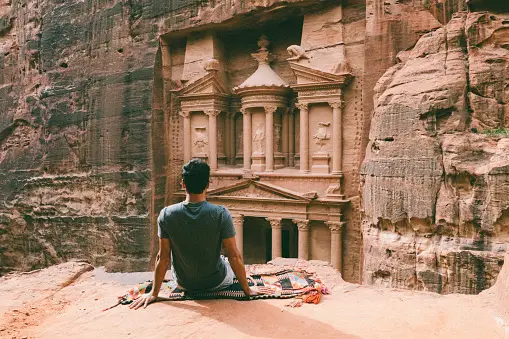
Even today Petra is known for many reasons like its historical backgrounds, architectures, rose and pink color stones, tombs, temples, theatres and Siq. Due to its uniqueness in the world Petra was renowned as one of the UNESCO World Heritage sites in 1985 and new 7 wonders of the world in 2007.
Related Article: Machu Picchu, Peru.
History of Petra, Jordan

As we knew that Petra is a historical travel landscape established by the nomadic kingdom of Nabataeans. Its history and legacy of Petra has been a symbol to modern-day archaeological and tourist sites in Jordan. Such a great ancient city was established during the time of 4th century BC, carved out of sandstone rocks and cliffs, making it a capital city of Nabataean peoples. Moreover, the city also served as a major trading hub, connecting various trade routes including the Silk Road during this period. Nabataean carefully chose Petra as a capital city for the serving path of a number of strategic caravan trails and sophisticated water conduit system.
Talabat (Middle East food processing and delivery industry) Logo and Tagline.
Over a period of time Petra is inhabited from prehistoric times and completely set up in the end of the 4 Century BC. Unfortunately during 312 BC Petra was attacked by Antigonus I Monophthalmus, general commander of Alexander the Great, but he failed to capture the whole city.

Year after year Petra extended as a major trade hub with 3, 00,000 citizens stand as a most prosperous city for trade during the time of Nabataean. However, Petra has survived many invasions and conquest of Romans and Jewish commonwealth by the nomadic group of Nabataean. But finally during 106 AD Petra was captured by the Roman emperor Trajan and added to the Roman Arabian tertiary. Eventually, Petra’s importance waned, and it eventually fell into disuse. Even during Roman periods Petra played as a major trade hub for Romans too until the decline of the empire due to a series of earthquakes.
The city remained largely unknown to the Western world until it was re-discovered by the Swiss explorer Johann Ludwig Burckhardt in 1812. After its rediscovery people believed that Petra has become a symbol of Jordan’s rich cultural history and immediately recognized as a one of the UNESCO World Heritage Sites.

Undoubtedly , Petra continued as one of the major tourist (ancient) destinations to many current backpackers. Continues to attract visitors from around the world who come to marvel at its unique blend of natural and man-made wonders. Moreover, due to its historical values and significance, manmade wonders and preserved cites Petra were considered as new 7 wonders of the world in 2007.
Facts about Petra, Jordan
Some of the Quick facts about Petra are;
- The name of Petra originates from the Greek word “Petros”, which means rock. Also called Al Batra in Arabic.
- Petra is also called ‘Rose city’, due to its rose colored rocks which make a red and pink complexion during sunrise and sunset.
- 85% discovery is yet to be done in Petra by the archaeological departments.
- Although Petra is situated in the desert land, Nabateans are very efficient and dedicated in their water collections and they successfully grow gardens in their courtyards.
- Even today you can spot rows of tombs carved into cliffs within this palace and home to more than 1000 tombs.
- Between 1 BC – 8 AD Petra was attacked by several earthquakes. The AD 363 earthquake caused massive damage and destroyed half of the city areas.
- As per data Petra was made during the period of 312 BC and considered as one of the oldest cities in the world.
- In 1985 Petra was added to UNESCO World Heritage site and finally in 2007 it also added new 7 Wonders of the World.
- After being rediscovered by the Swiss explorer in 1812, the city title changed to “Lost city”.
- Entrance of Petra has a very narrow gorge named Siq, which is 1 km long and each side of cliffs are around 8 meters high.
Bojangles- A Jordan Restaurant.
Inside of the Petra, Jordan
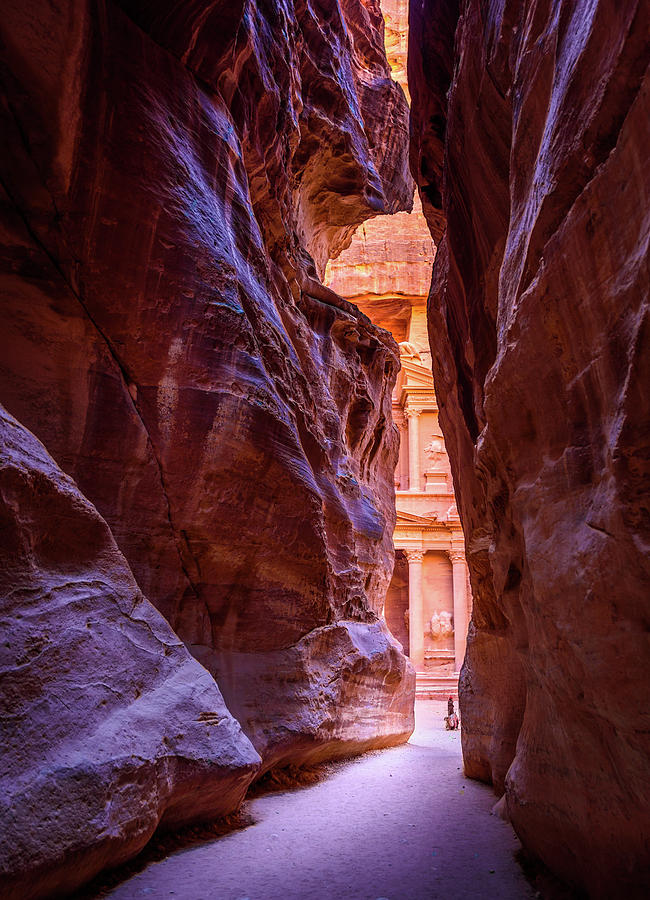
Lots of tourists and people believe that Petra isn’t made by humans? Even today they believe that it is made by God or Aliens, especially its massive doorways, archways and tall buildings. It is composed of stone which was sculpted by hand using chisel and was a great inspiration to incredible engineering. Let’s see one by one what is their inside Petra, Jordan?
Initially when you arrive in Petra you will see a very narrow entrance/corridor known as Siq. (Which is 1 km long and each side of cliffs are around 8 meters high.) Siq is a passage with an extremely high stone wall made through tectonic forces and worn smooth by water. Initial passage or entrance represents humans (Nabataeans) dedicated works over hundreds to thousands of years.

First or initial façade you will spot after entering the Siq, is the AL Khazneh or “the Treasury”. Considered as the most magnificent building in the whole Petra known as the “face” of the Petra. After that just take right, the façade will take you much deeper into the city, where you can see more grand, big and much elaborate buildings. It also includes one of the oldest manmade structures (includes tombs). Once you complete these massive architectural beauties you will be near the end of Petra, which is 850 steps leading to a famous monastery.

Once you reach Monastery it is the final spot to explore in Petra, including more mystery remains beneath the under surface of the building as less than 15% are discovered. Here also you can see the rest of 85% untouched or yet to be excavated monastery or building or historical items available, if you wish to discover or take picture you can.
So, Petra inside journey will be a more than a day journey, but its historical and architectural fact will reflect you until your lifetimes.
The Siq
Siq is a narrow gorge and prime entrance to the ancient city of Petra. Once you finish your 10 minutes of walking in the gravel hill, you’ll reach this beautiful Siq. Siq covered by the massive striped red stone walls and series of twisted paths.
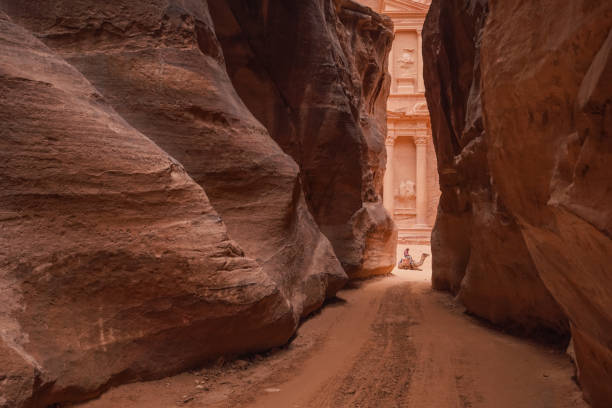
Siq approximately 1.2 km long and towering rock formation upto the height of 262 feets. Once you start your journey amidst these Siq there are a series of twists and turns pathways that ultimately reach the popular Treasury of AI- Khazneh, which is carved into the red color sandstone cliff.

If you analyse the history of Siq its major importance goes to Nabateans periods. They are real people who built Petra and they perfectly utilise the importance of Siq. Historically during the time of Nabateans Siq served as a main access point for their daily activities. However, the route is a prime gateway to Arab traders especially those who trade spice and other masala items to Middle East.

Make sure that Siq is massive and it expects minimum 20 to 40 minutes of your time to pass from its entrance to the Treasury. Today this massive architectural brilliance showcasing stunning arecalogical features and excellence of ancient carving techniques in Petra, Jordan.
Petra, Jordan Ticket Price
Visitors are eligible to enter Petra only after getting valid tickets. Tickets are available at the visitors center and prices may differ to foreign and domestic visitors and length of your stay.
1. Fees for Accommodate Visitors (Visitors who stay at least one night)
| Entrance Fees | Price |
| For 1 Day | 50 J.D |
| For 2 Days | 55 J.D |
| For 3 Days | 60 J. D |
Fees for the accommodated visitors who visit Petra on the first day of his or her arrival.
Entrance Ticket: 90 JD – 40 JD = 50 JD.
2. Fees for Non Accommodate visitors
Entrance Fees/ Tickets; 90 JD.
How to Get Petra, Jordan
Getting to Petra has multiple ways, but most backpackers wish to reach either through Flight or Road. To understand more about these options lets go much deeper;
1. Fligh
A more common option to foreign visitors, Queen Alia International Airport (AMM) in Amman is the nearest airport which welcomes major international flights. From AMM there are a number of private car/ taxis or JETT bus services available, they help us to reach Petra. You can also book your flight ticket to King Hussein International Airport (AQJ) in Aqaba.
2. Car
Book a rental car or taxis from Amman to Petra as a direct trip, which usually takes 2.5 hours to 3 hours of journey to reach. Approximately your journey covers 236 km, but the interesting part here is you can experience the most breathtaking beauty “Kings Highway” while you traveling.
3. Public Transportations
If you’re looking to make Petra trip in a more budget conscious way, then public transportation is a better option to you. Not just a cheaper one, moreover you no need to stress about parking, since Petra doesn’t have great parking facilities.

Bus (JETT bus) operates daily at 6:30 AM from Amman and Aqaba to Wadi Musa, returning at 5:00 PM. The bus will charge $14 (JD10) per person for one way. If you’re coming from Aqaba, everyday at 8:00 AM buses leave for Petra and return everyday at 5:00 PM. You need to keep $21 (JD15) to travel from Aqaba.
Make sure that JETT buses need pre-booking systems, so if you wish to travel this unique, comfortable and reliable bus options visit its official website and book your seat today.
When is the Best Time to Visit Petra?
Spring and Autumn are the perfect seasons to step in the land of Petra. From March to May, the region usually boasts the spring season, when visitors go to experience mild weather conditions with blooming wildflowers and scenic surroundings. Its temperature range from 15℃ to 25℃ makes easy for hiking or expedition of Siq and season even more ideal to those who are coming with a camera.
Final Words
Petra, Jordan is a great architectural marvel site which shows the symbol of historical and architectural prosperity to the present generations. As we knew that today we can see only 15% of excavated sites and the remaining 85% are uncovered and yet to be done. Even today there are a lot of ongoing archaeological research and conservation efforts are taking place to preserve its historical significance for future generations.
As a traveler or history seeker, never miss exploring this ancient city on foot, make a mark in your travel bucket list. Such a remarkable architecture and learning destination exhibits about its history through guided tours and interpretive exhibits. Smithsonian magazines listed 28 places all over the world that every visitor should visit before they die including Petra, Jordan.
Related Articles: Hampi; A Living Heritage of India’s Golden Era.
Q: Petra is located in which country?

A: Petra is archeological and ancient city located in the present day of Jordan Country.
Q: Why was the Petra abandoned?
A: During 363 AD Petra faced several Earthquakes caused severe damages to the city and changed its entire trade routes.
Q: When was the Petra Built?
A: Such a great ancient city was established during the time of 4th century BC, carved out of sandstone rocks and cliffs, making it a capital city of Nabataean peoples.
Q: Why is the Petra Called as a “Lost city”?
A: After the 14th century AD, entire city was collapsed and lost to the western world.
Q: Why is the Petra is one of the 7 wonders of the world?
A: Because of its great historical, cultural and architectural significances.